The surge in winter sports has fueled rapid growth in the ice and snow gear sector. As China's winter sports industry builds a more robust ecosystem, its production and supply capabilities keep strengthening. The sector is steadily transitioning from its infancy to a stage of high-quality development, while its competitiveness and brand clout overseas continue to grow.
This growth is reflected in trade data. According to Customs statistics, since the second half of 2025, China’s exports of ice skates to Central and Eastern Europe Countries (CEECs) and ski wear to the North American market have grown at double-digit rates. Why is Chinese winter sports gear winning over more and more fans abroad? To find out how the industry is adapting so swiftly to worldwide consumption trends, our reporters investigated.
- Editors
"With these new race skis, the turns are more responsive, and they have just the right flex. The feel is right up there with other top international brands," remarked Sergeyevich, a Belarusian skiing enthusiast, at the booth of Harbin Qianmao Xuelong Sports Goods Co., Ltd. during the Harbin International Ice and Snow Economy Expo 2026.
As one of China’s early players in winter sports equipment, Qianmao Xuelong’s journey mirrors the rise of homegrown gear. Founded in 2000 as an importer and seller of ski equipment, the company made its own breakthrough just two years later by producing ski boots and bindings. These technological breakthroughs fueled continuous product updates, paving the way for the company’s expansion into overseas markets. Building on this foundation, its product sales have soared since 2023, capitalizing on the booming ice and snow tourism in its home province of Heilongjiang. This surge in demand has kept its production lines running at full capacity. To meet the demand, Qianmao Xuelong has adopted semi-automated production, significantly boosting its output. It now offers a full product lineup from entry-level to professional race-grade equipment, manufacturing up to 10,000 pairs of ski boots and 10,000 sets of bindings annually.
A pair of race skis, emblazoned with the national flag of China, also known as the Five-star Red Flag, was a standout feature at the company’s booth.
“These are the freestyle aerial skis we developed for the national team,” explained Li Zhibo, the company’s general manager. “Having passed four rounds of rigorous testing, they’re poised for the Milano Cortina 2026 Olympic Winter Games.”His introduction immediately attracted a crowd of international buyers. Many gathered at the booth, eager to discuss potential partnerships. With this expo as a launchpad andcombining core technological strength with high cost-effectiveness, this Harbin-made ski is now poised to go global.“The model was developed on a commission for the Winter Sports Management Center of GASC,” Li added with evident pride. “It uses aerospace-grade composites and is shaped via precision 3D printing, which cuts weight while boosting toughness. And the price? Just half that of comparable imported skis.”
What truly sets the company apart is its customization capability. Its R&D team can customize the construction and material composition of the ski core based on each athlete’s unique power delivery and skiing technique. This represents a shift from making athletes adapt to stock skis, to crafting skis that adapt to the athlete. It is a change supported by technical metrics that are among the best in the world.“We look forward to seeing Chinese winter sports brands reach more countries and regions,” Li said. Building on the momentum of its equipment development for the Milano Cortina 2026 Olympic Winter Games, the company plans to expand into new categories like race snowboards and alpine skis, while also building out its retail network to ensure Chinese skis make their mark on both the global competitive circuit and in the marketplace.
The appeal of Chinese-made winter gear extends beyond skis. Ski poles, too, are steadily gaining popularity among overseas consumers.
On the ski slopes, two slender poles are a skier’s essential tool. They help skiers push off, change direction, control speed, and maintain balance. The showroom of Ninghai BETTER Outdoor Products Co., Ltd. in Ningbo City, Zhejiang province, displays a staggering variety of Ski polemodels, featuring foldable, telescopic, and ultra-lightweight designs.
A training pole for alpine skiing beginners has emerged as a star product, winning over international customers. Its appeal begins with its weight: crafted from aviation-grade aluminum alloy, the ski pole comes in at under 200 grams. Equally important is its stability, achieved through an ergonomic handle made from a special, textured material that provides a secure anti-slip grip, even when the skier is wearing gloves.
“We adapted the design for European and American users by enlarging the handle and improving the telescoping mechanism,” explained Guo Jinlong, the company’s foreign trade manager. Orders for this pole surpassed 400,000 pairs during the 2025 ski season alone, representing a 30 percent jump from the previous season.
Inside the production workshop, the air hums with activity. The whir of cutting machines sends aluminum shavings flying, accompanied by the hiss of grinding wheels. Here, raw materials like aluminum alloy are cut, ground, painted, and finally assembled into finished ski poles.
“We started out making only trekking poles,” said Guo. “But after the Beijing Winter Olympics, we saw the opportunity and pivoted. Aluminum alloy ski poles have since become our flagship line.”Today, the company exports more than five million pairs of ski poles and related trekking products annually, with the bulk of shipments going to Europe and North America. Building on this strong base, it is now actively cultivating new markets in South America, including Chile and Colombia.
Ninghai is home to many companies like BETTER. In fact, the county accounts for a staggering 70 percent of all ski poles exported from China. Here in Ninghai, this cluster of companies has given rise to a winter sports equipment sector centered on products like ski poles. The sector has an annual output value approaching 1 billion yuan, supported by a comprehensive supply chain that covers everything from tubing and buckles to handles and final assembly.
Just steps away from the BETTER’s ski pole factory, molding workshops are buzzing. Inside, fully automated robotic arms work at full tilt on mold manufacturing and injection molding.
This means the entire process, from raw aluminum tubing to finished pole, can be completed within the county. “We can turn a client’s concept into a prototype in seven days and scale up to mass production within thirty,” said Zhu Xuefeng, the company’s general manager. This integrated industrial ecosystem, coupled with efficient and flexible production methods, gives manufacturers in Ninghai not just ample capacity but also a compelling edge in cost-effectiveness: for comparable performance, BETTER’s poles cost about 60 percent of what European or American brands charge.
While keeping prices competitive, the company isrelentlessly moving its products up the value chain. A standout in its showroom is an ultra-lightweight model that tips the scales at just 180 grams. “We’re pushing the envelope on technology, developing even lighter poles, anti-freeze locking mechanisms, and more advanced ergonomic handles,” said Zhu Xuefeng, pointing to a wall of patents. By partnering with top-tier raw material suppliers, the company now sources high-performance, recyclable materials that have slashed the carbon footprint of each pole by over 50 percent.
Going global, however, means navigating a complex web of international rules. To help with this, everything from technical guidance on expedited clearance to dedicated Customs clearance “green channels” for ski products and expert interpretation of regulations to ensure compliance is on offer. During peak production seasons, it’s common to find uniformed Customs officers on the factory floor, delivering what they term “door-to-door” support.
“Our goal is to help local firms secure winter sports orders and expand internationally,” said Tian Mingchao, section chief of the Comprehensive Business Division II at Ninghai Customs,a subsidiary of Ningbo Customs.“We’re implementing a suite of measures to streamline trade. These include rolling out the ‘advanced declaration’ system, simplifying the process for companies to obtain preferential certificates of origin, and providing advance ruling on Customs classifications, so as to make cross-border transactions quicker and less costly for our businesses.”
A photo saved on Zhu Xuefeng’s phone captures a defining moment: a French athlete, clutching a pair of carbon-fiber running poles, triumphs at the 2024 Ultra-Trail du Mont-Blanc. The poles were co-developed by BETTER and its client, a testament to the company’s collaborative innovation.
“Ultimately, building a recognizable brand is the only way to secure a lasting position in this competitive field,” Zhu said. To that end, the company is boosting its profile by signing elite international athletes to endorsement deals and sponsoring major sporting events. At the same time, it is building local teams in key overseas markets to oversee marketing, sales, and customer service, a strategy designed to embed the brand deeply within local communities.
Disclaimer:The above content is translated from Chinese version of People’s Daily. The People’s Daily version shall prevail.
Related News
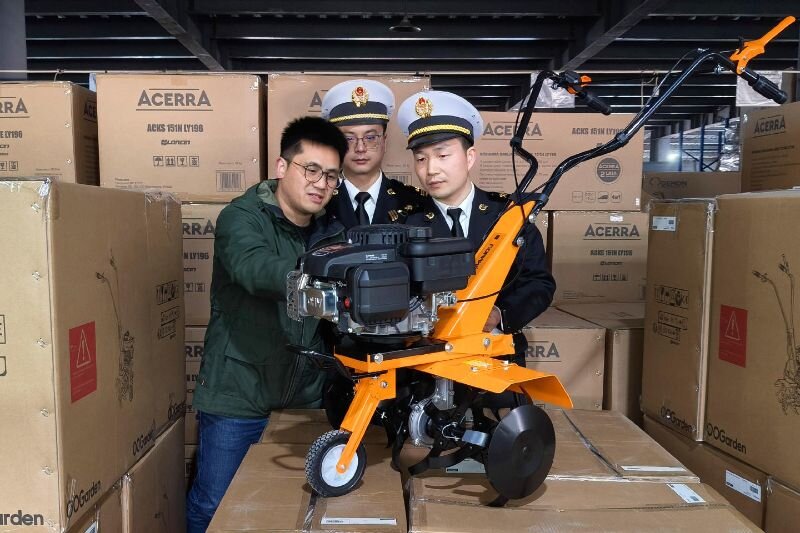
Ningbo Garden Machinery Gains Global Traction as Innovation Fuels Export Surge
2026-01-09
From January to November 2025, Ningbo's shipments of agricultural and garden machinery totaled approximately 3.61 billion yuan, marking a robust 23.9 percent increase year-on-year. Growth was even more pronounced in strategic markets, with exports to Belt and Road partner countries and CEECs rising by 28.1 percent and 26.6 percent, respectively.
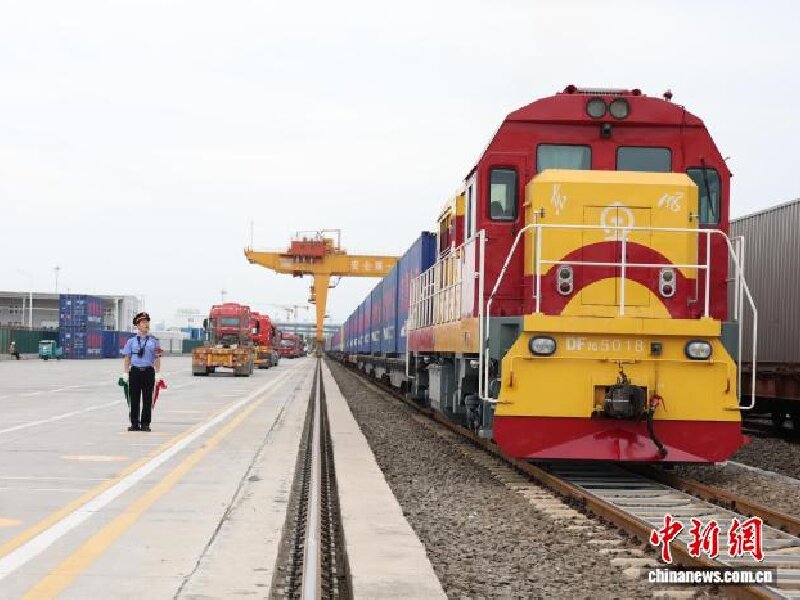
China-Europe Railway Express: Two-Way Connectivity Fuels Regional Economic Growth
2025-09-17
From January to August 2025, a total of 2,002 Shandong China-Europe freight train services were completed, with return journeys accounting for 46%, demonstrating smooth two-way connectivity.

Ningbo's Total Trade Nears 1 Trillion Yuan in First Eight Months
2025-09-16
During the same period, imports and exports with Africa reached 58.13 billion yuan, representing a year-on-year increase of 23.1%. Trade with CEECs amounted to 41.06 billion yuan, representing a year-on-year growth of 9.3%. Additionally, trade with Belt and Road Initiative (BRI) partner countries totaled 489.22 billion yuan, growing by 10.5% year-on-year.
Hot News
